
LC, Sydney, Australia (Drainkids, SDS, Grummets, Wu Cru)
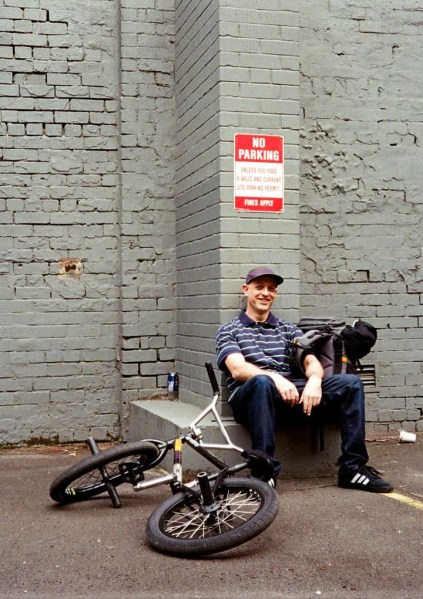
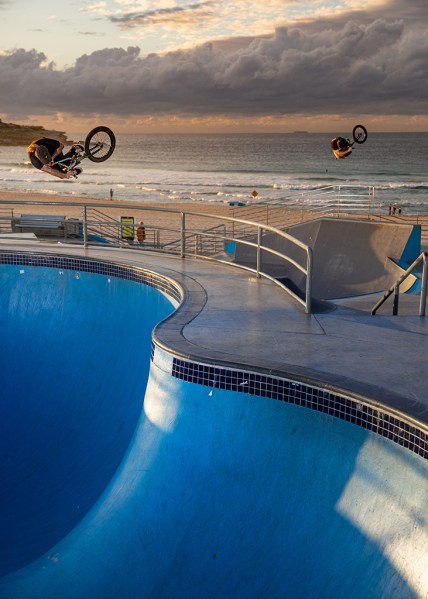
LC caught my attention on Instagram a number of years ago with his punchy, contrasty and colorful photos from Australia. He’s usually posting galleries of three or more photos seemingly from the same day and sometimes the same session. If you don’t know him from the internet, you may know him as the one who shot the cover of the DIG 2019 book where two guys are doing tabletops at the same time (see below). Looking a bit more into him, I learned that he’s an OG all around Australia and has spent a good amount of time in front of a video camera as well- since 1991 in fact. We love to see it because nothing makes for a better photographer than someone who knows what it’s like to be put on the spot for the camera’s sake.
Getting serious about photography around 2013, LC brings his gear out with him for every session as he gathers materials for a book that he hopes to publish this year. His main camera is a Canon R5 which he tethers to Godox flashes. You can catch him shooting between sessions and off the bike for his architecturally-based page @el.cii page or his street photography project @eastinfront.


LC cites classic photographers like William Eggleston, Ernst Haas and Joel Meyerowitz as inspiration for his non-BMX work, although the environmental, “from-the-hip” style undoubtedly spills over into a lot of his riding photos.


Since first getting behind a camera in the 90s, LC has transformed from rider to filmer to photographer. With an interest spanning decades, he’s seen camera tech make leaps and bounds in performance and compatibility but doesn’t let technology drive his image-making.
“I think you can make the most of any conditions when you’ve got flashes. You’ve just got to set everything to suit your environment.
If I don’t have strobes on me then Australian golden hour works a treat.”

LC makes time for photography as much as possible, carrying a Ricoh GR on him always and planning his day around making free time to go out and shoot.
“I’ll try to work it in if I’m going somewhere and know I can do a detour and shoot for a hour or so.”


“…the most important part of a photo is pretty subjective, really. Depends on the type of photography and the story you’re trying to tell.
With BMX- at least for me- I want to try and show the spot and the trick in the best light possible.”

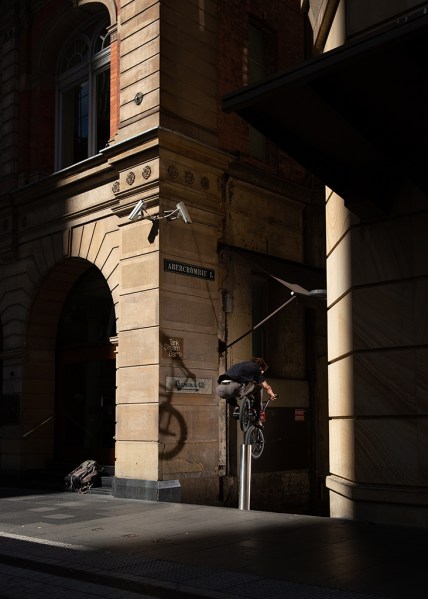
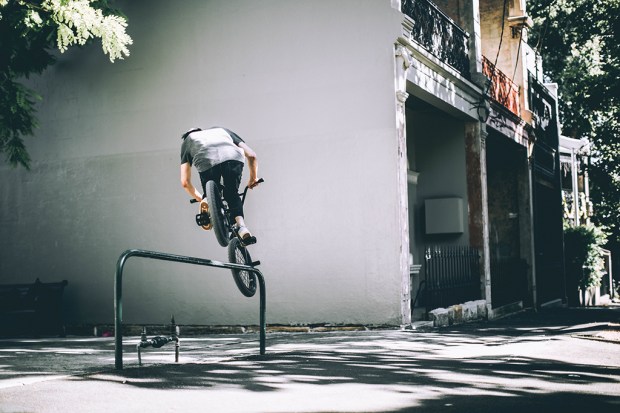
Preferring large cities for his canvas, LC thrives creatively in environments with nuanced details and room for interpretation. He sees obvious parallels between shooting BMX and shooting candid street photography and believes that they compliment each other nicely. His flexibility and attention to detail while shooting in the streets is a technique he carries over into BMX.
“Sometimes you’re at a spot where there’s not a lot going on, so the easiest call is to work out something more you can do creatively.
But unless you’re paying close attention to the whole environment, you might miss that something extra.”
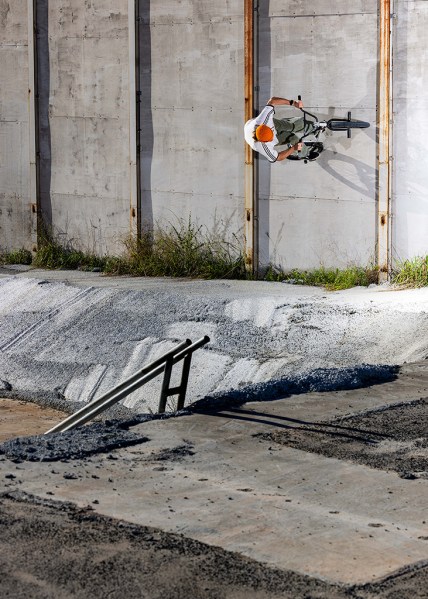

 Push It A Stop