Category Archives: Gear

Rob DiQuattro’s Camera Bag And Workflow

Linking up with Rob while he’s in the field is no easy task- As you can tell, he’s got more cameras than hands, and numerous important deadlines to meet. Luckily I caught him while traveling slowly in rainy interstate traffic for a few minutes of his time. Enjoy a look at some of the prototype lenses and extended life batteries that power his vision.

We also spoke for a few minutes, off the record, about his unconventional video workflow, which includes compressing with iMovie.

“iMovie is a really good compressor, you just have to trick it into being good.”

Rob’s technique involves laying both HD and SD footage (a typical mix in his edits) in an HD timeline, and exporting from Final Cut, uncompressed, in two minute segments. He swears that he can achieve far superior image quality if he exports with increments not exceeding 120 seconds. These segments are then imported to iMovie and compressed with normal HD settings, utilizing the popular H.264 codec. He then pieces the segments back together in Final Cut, and exports uncompressed. Obviously he bumps up the “fun” filter about five or six points, then uploads to Vimeo.

His self-proclaimed magnum opus of standard definition is the No Peg Left Behind Campaign Ad he created for 14th Division Street Controller Nominee Damian Racut.

Rob insists that Cali’s Patrick Taber had used the HD timeline technique in an SD edit many years ago, prompting his own research into negating Vimeo’s backend compression.

DV Breakthrough: The Navimeo Method

Late yesterday, Ryan Navazio publicly announced a workflow for standard definition footage to yield better results after being uploaded to Vimeo- Trick the uploader into thinking it’s working with an HD video.

He went so far as to re-upload the Talk Is Cheap Promo, with positive results.

Visit The Navi Arm for more in-depth coverage of Navaz’s export settings.

In Focus: Filming Lines At Night

Manzoori goes through pretty much every option you have for on-camera lighting and breaks them down with examples. He even goes into the post-adjustments he makes to compensate for the grain incurred when shooting at higher ISO’s. All-in-all, an extremely advantageous episode.

In Focus: Shooting In Bowls

Legendary skate photographer Grant Brittain drops a boatload of knowledge in this one. Most of what he is saying applies to not just shooting bowls but everywhere else too. So many good points in here, just watch it.

“I think it’s good to learn the rules first, and then break the rules.”

How Cheap Is Talk? A Few Questions With Ryan Navazio

Just a week away from the release of the new Cult DVD “Talk Is Cheap”, I wanted to talk shop with filmer/editor Ryan Navazio- because one man’s premiere date is another man’s deadline.

How close are you to being finished with the video?

All but two parts are finalized and I have two more to go. Plus the credits. Also need to plug the graphics into everything.

How many gigs of footage are you working with?

Not sure what the total is, but let’s put it this way- When I lay out peoples footage in the timeline for the first time it can be up to an hour long. I capture everything, every crash, lots of mistakes, whatever- just in case. So in the end I have tons and tons of footage that all gets cut down. But having all that stuff in front of me at the end helps me remember how the part should look. It’s hard to explain but I try and memorize all the clips, so if someone were to ask me what they have I can recite it back to them, clip for clip. It helps a lot when it comes to editing.

How many hours a day are you editing?

It’s hard to say, but probably twelve at the least. But if I’m not actually editing I’m thinking about editing, or I’m at the record store or on YouTube. I’ve been taking breaks on the weekends but that just usually ends with me being up all night.

What are the biggest challenges at this stage?

Making everything flow together. Keeping myself sane. Dealing with the tediousness of finalizing peoples parts.

At what point do you choose the songs?

The intro song was chosen two summers ago, one song was picked yesterday. I try and have all the songs picked before I start editing, and in this case, I had about half the songs before I started.

How does this video compare to the first Cult video?

It’s much longer. Double the length. Alex & Bobby have full parts. Krone has a part. And I think the overall vibe is more relaxed. I think its filmed a lot better too, for the most part.

Are you done with the VX after this?

Definitely, and unfortunately. Then again, if someone wants to hire me to film with a VX, why not?

In Focus: Follow Filming Basics

Follow filming can get complicated, so Manzoori takes us through pretty much every step needed to get it dialed in. Remember: Steadyshot OFF when the fisheye is ON.

Field Notes: OSS In New England

Returning from a five-day excursion with some of the OSS team in New England, I thought I would reflect on some of the issues I encountered leading up to and during the trip. You can learn from my mistakes, but if you’re like me, you have to learn on your own. These things happen sometime.

First of all, I lost my flisheye; flipcam fisheye. It was dangling from my Kodak Zi8 connected to a magnet at the end of the strap of the camera. I was devastated. It must have flung off when I was throwing it in my pocket somewhere between Boston and Billerica. Really though, they are only $17 and the fisheye gets overused sometime anyway.

A couple days before embarking on the trip, I was shooting with Nick Seabasty and one of my Lumedyne Action Packs made the sound of a paintball gun when the flash fired. At first I thought it was probably the bulb exploding, but upon further inspection, the noise was coming from the pack and the bulb was fine. I kept shooting with it, because it was obviously already fucked, so I might as well get the photo… it was still firing. I called Lumedyne and explained to him the problem and he told me it sounded like an arc in the circuit, something that only he could take care of because of the intricacies of the Action Pack itself. This isn’t the first time I’ve had problems with the Lumeys… I bought them from a skate photographer on the west coast knowing that one of the packs wasn’t producing a flash. I had read for years about the problems with Lumedynes and the risks involved with their purchase, but with their power and short flash duration, it is the most viable option for a lot of people.

Down one 200w Action Pack, I was lucky to have been collecting a grip of Sunpak 555‘s. I broke them out of the closet and started charging the Ni-Cad battery packs they run on. 2 555’s on one stand was usually my setup before I had purchased an Alien Bees setup early in 2011. On half power a 555 produces a 1/900th duration, barely fast enough for action sports. At 1/4 the duration is a much safer 1/1800th.

On a side note, I used to use these miniphone plug splitters to use the same PocketWizard on two different flashes. I remember that they would sometimes fail and only one flash would go off. Maybe it was because the two outputs were stereo and not mono. Although I did try the dual mono, same problems. Not sure why that is, but it wasn’t necessary with 4 receivers. (My typical setup was a 200w Action Pack for rim light, 2 555’s at quarter power for key and a Vivitar 285 at half power for fill).

(Power stance not necessary but recommended. Photo by Adam22.)

Every night I was very proactive about charging batteries, even taking care of the VX a few times. My Lumey battery is pretty old at this point and probably has only about 50 flashes in it, so that’s something I have to consider / get fixed immediately. What saved me most was a car power inverter than turns your 12V cigarette adaptor into an AC outlet- particularly for the flipcam I use, which has an internal battery that lasts probably 30 continual minutes.

The 285 flash was running on four AA batteries (Energizer Ultimate Lithium– the best) and I usually keep at least six of those on deck.

I don’t know if anyone else has this problem, but I keep a lot of old images archived on my memory card, for some reason, I guess if anything were to happen to my hard drive at home… who knows. I was shooting a sequence and started to run out of space. I have a folder dedicated to the sequence images in the camera so that I can easily dump them after each failed attempt.

In Focus: Low-Tech Accessories

A white balance card, a plastic bag, a blower and lens cloth, extra cables, a flashlight, a gardening pad, gaffers tape, tools and wax.

In Focus: DSLR Accessories

In this week’s In Focus, Mike Manzoori talks about three basic accessories we should have to accompany our DSLR for filming- an external microphone, a viewfinder and a mini tripod. He takes us through some examples and shows us how to rig some stuff ourselves. All-in-all, a very helpful video.

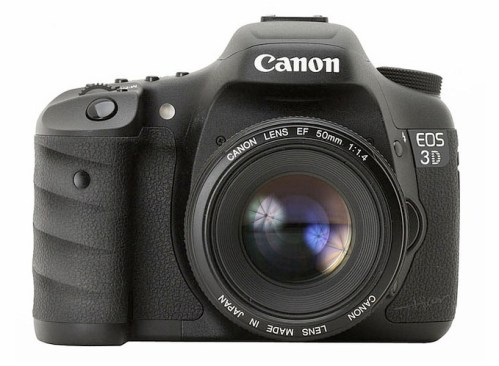
The Canon 3D

No, not like it shoots in three dimensions, thats just the name. It is 46mp full-frame with dual DIGIC 5+ processors. Also Canon has addressed the issue of sensor overheating and did something to help. Not sure what it is. These are all rumors I guess, everything will be unveiled at this years Photokina.